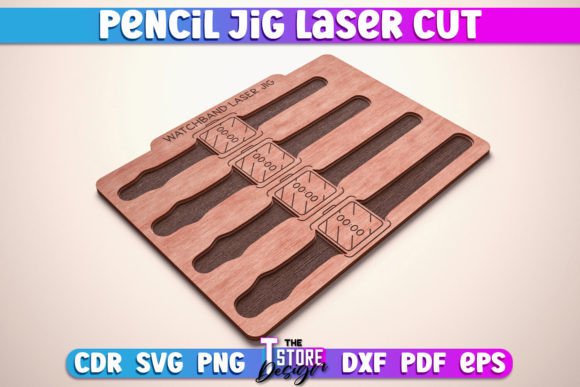
Watch Jig Laser Cut SVG: A Designer’s Practical Review
As an embroidery designer who spends half my life digitizing and the other half stitching, I have learned to look past the glossy preview images. We all know that what looks crisp on a screen does not always translate cleanly to fabric. When I first encountered the Watch Jig Laser Cut SVG, my initial reaction was one of cautious curiosity. This is not a standard embroidery file; it is a tool designed for precision, specifically tailored for laser cutting machines. The description notes clearly: red lines for cutting, black lines for engraving. For those of us in the Crafts and Graphics space, this distinction is vital. It suggests a hybrid workflow where digital precision meets tactile creation.
First Impressions and Visual Personality
The mood of this design is industrial yet refined. It speaks to organization and professionalism. Unlike a whimsical floral motif or a bold typographic quote, a jig serves a functional purpose. Visually, the layout is clean, relying on geometric accuracy rather than decorative flourishes. This minimalism is its strength. In the world of handmade products, we often clutter our designs with too many elements. Here, the restraint is appealing. It feels like a piece of equipment you would find in a high-end boutique or a serious maker’s studio. The visual personality is understated, which allows it to blend seamlessly into a brand identity that values quality and attention to detail.
When evaluating this as a potential asset for a craft business, I immediately thought about how it could elevate the presentation of other items. It is not necessarily the star of the show but rather the stage upon which the star performs. This subtle role is often overlooked by new Etsy sellers who focus solely on the primary product. However, experienced creative entrepreneurs know that packaging and presentation tools can significantly increase perceived value.
Real-World Application in Embroidery Projects
Let us consider a realistic scenario. Imagine you are preparing a custom order for a local watch retailer or a luxury gift shop. They want a display solution for their high-end timepieces. Using the Watch Jig Laser Cut SVG, you can cut a precise holder from acrylic, wood, or heavy cardstock. Now, where does embroidery come in? You might use this jig to hold a cap steady while you embroider a logo on the brim, ensuring perfect alignment every time. Alternatively, you could create branded packaging inserts. Picture a tote bag design that includes a small, laser-cut tag made using this file, adding a unique textural element to the finished product.
For small shop owners, consistency is key. If you are producing batches of personalized gifts, such as engraved watches or custom sweatshirt embroidery, having a reliable jig ensures that every item looks identical. This consistency builds customer trust. When a buyer receives a product that feels professionally manufactured, they are more likely to leave a positive review and return for future purchases. The Watch Jig Laser Cut SVG facilitates this level of professionalism by removing human error from the positioning process.
Material Considerations and Technical Constraints
While the potential is high, we must address the technical realities. The product description states that this is great for laser cutting machines and includes a zip archive. It explicitly mentions compatibility checks for your cutting machine and software. As a designer, I cannot stress enough how important this step is. Before committing to a large batch of materials, you must verify that your specific laser cutter interprets the red and black lines correctly. A misinterpretation could result in engraving where you intended to cut, ruining expensive material.
Furthermore, consider the materials you are cutting. If you are using this jig for commercial embroidery setups, you might be cutting thick acrylic or dense wood. Ensure your laser has enough power to penetrate these materials cleanly. On the other hand, if you are using it for lighter crafts, such as paper or thin cardboard for packaging, the settings will need to be adjusted to prevent burning or charring. The fabric texture of any accompanying embroidered items should also complement the rigid nature of the laser-cut jig. A soft, plush baby embroidery item paired with a sleek, hard-edged jig creates a nice contrast, but you must ensure the jig does not snag delicate fabrics.
Strategic Use for Branding and Value
Incorporating tools like this into your workflow can enhance your brand consistency. Imagine sending out a holiday embroidery kit to your subscribers. Including a laser-cut organizer made from this Watch Jig Laser Cut SVG adds a layer of surprise and delight. It transforms a simple transaction into an experience. For apparel decorators, this could mean creating custom hoops or frames that bear your logo, engraved via the black lines in the file. This turns a utilitarian object into a marketing asset.
However, there are places where caution is required. Do not assume this file is ready for immediate production without testing. Always run a test cut on scrap material. Check the kerf width—the amount of material removed by the laser—to ensure your parts fit together snugly if assembly is required. If the jig is meant to hold items securely, even a millimeter of error can render it useless. Additionally, if you plan to sell the physical jigs as small shop products, be aware of the time investment. Laser cutting can be slow for intricate designs, so calculate your costs accordingly to maintain profitability.
Practical Notes for the Modern Maker
Before you download and start cutting, keep these practical tips in mind. First, confirm the licensing terms. While the file is a digital product, ensure you have the right to sell the physical items you create with it. Many designers allow commercial use for physical goods but restrict the resale of the digital file itself. Second, organize your workspace. Laser cutting produces smoke and residue. Ensure your ventilation is adequate, especially when cutting materials like acrylic or treated woods. Third, consider the end-user. If you are selling these jigs to other crafters, include clear instructions on how to use them. A well-documented product reduces customer support queries and enhances satisfaction.
Finally, think about scalability. Can this design be resized without losing integrity? Vector files like SVGs are scalable, but physical constraints of your laser bed may limit size. Plan your production runs to maximize material usage and minimize waste. By treating the Watch Jig Laser Cut SVG not just as a file but as a component of a larger system, you unlock its true potential. It is a testament to the idea that in modern making, the tools we use are just as important as the products we create. Whether you are an experienced embroidery designer or a hobbyist looking to streamline your process, this asset offers a pathway to greater precision and professionalism.