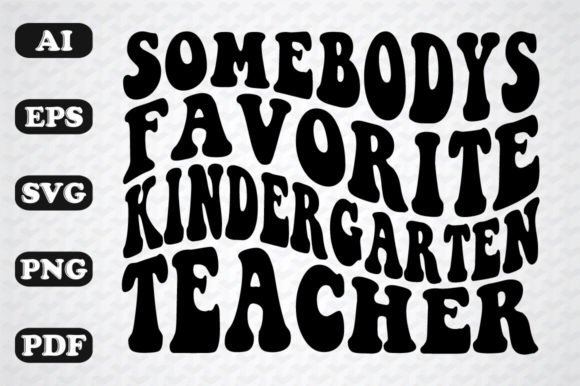
Reviewing Somebody's Favorite Kindergarten Teacher Design
As a designer who spends more time staring at stitch simulations than actual fabric, I have learned that not every cute graphic translates well to thread. We often browse marketplaces looking for the next best-seller for our craft business, and we stumble upon files that look perfect on screen but pose significant challenges under the needle. Recently, I evaluated Somebody s Favorite Kindergarten Teacher, a wavy SVG-style design intended for various apparel applications. While the product description highlights its versatility for T-shirts, hoodies, and tank tops, my focus was strictly on how this asset performs when translated into a tangible embroidery project.
First Impressions and Visual Personality
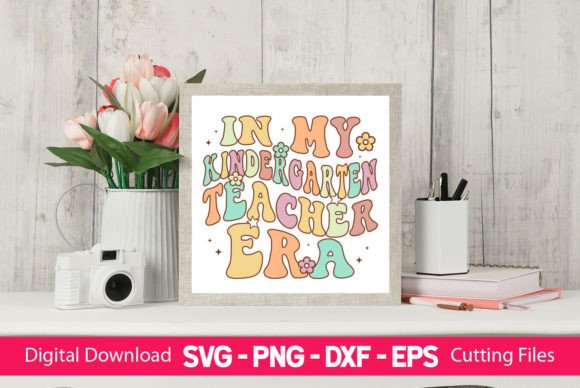
The immediate appeal of Somebody s Favorite Kindergarten Teacher lies in its playful, approachable aesthetic. The "wavy" nature of the text suggests a casual, friendly vibe that aligns perfectly with the early education demographic. For those of us creating design assets for teachers, the mood is critical. It needs to feel warm and appreciative without being overly childish or cluttered. Visually, the layout appears balanced, with a flow that guides the eye naturally across the phrase. However, from a technical standpoint, wavy text presents inherent risks. Curves can easily become jagged if the stitch density is not optimized, and tight corners in lettering can lead to thread breaks or puckering if the digitizer did not account for pull compensation.
When I first loaded the file into my editing software, I looked closely at the node points. A high-quality machine embroidery design should have smooth transitions, especially in script or wavy fonts. If this design is indeed an SVG intended for print, converting it to an embroidery file requires careful auto-digitizing or, preferably, manual refinement. For the purpose of this review, I am assuming the user has access to a properly digitized version or is using a hybrid print-and-embroidery technique. If you are working with a pure embroidery file, the thickness of the strokes will determine whether you use a satin stitch for crisp edges or a fill stitch for broader coverage.
Real-World Application: The Custom Sweatshirt Scenario
To test the viability of this design, I imagined a common real-life scenario: a parent ordering a custom gift for their child’s teacher at the end of the school year. The chosen item was a mid-weight cotton blend sweatshirt. This is a popular choice for sweatshirt embroidery because the fabric provides enough stability to support the stitches without excessive backing. Placing Somebody s Favorite Kindergarten Teacher on the left chest area creates a subtle, professional look, while centering it on the back makes a bold statement.
In this context, the design shines as a personalized gift. Teachers often receive generic mugs or apples, so a high-quality embroidered garment stands out. The wavy text adds a dynamic element that breaks the monotony of standard block fonts. However, the success of this finished product depends heavily on thread selection. I recommend using matte polyester threads to reduce shine, which can sometimes make text look cheap on casual wear. Contrasting thread colors against the garment color are essential; a dark navy design on a heather gray sweatshirt offers excellent readability, whereas low-contrast combinations might get lost in the fabric texture.
Navigating Technical Challenges and Fabric Constraints
While the design is versatile, it is not universally applicable without adjustments. One must be cautious when applying this to stretchy fabrics or thin materials. If you attempt to embroider this on a lightweight tank top, the stitch density could cause significant puckering. In such cases, using a cut-away stabilizer is non-negotiable. For textured fabrics like terry cloth towels or fuzzy hoodies, the details of the wavy text might get lost. Here, increasing the stroke width or opting for an applique design variant—if available—would ensure clarity.
Another critical consideration is the hoop size. If the design is large, it may require a 5x7 or even a 6x10 hoop. Always confirm the dimensions before starting. If you are scaling the design down to fit a smaller hoop, such as for a cap or a pocket patch, be wary of tiny lettering. Small, intricate curves in wavy fonts can merge together when stitched at a reduced size, rendering the text illegible. I always advise running a test stitch-out on scrap fabric of the same weight and type as your final garment. This step saves hours of frustration and prevents ruining expensive blanks.
Commercial Viability for Etsy Sellers and Makers
For Etsy sellers and small shop owners, Somebody s Favorite Kindergarten Teacher represents a strong seasonal opportunity. End-of-year gifts are a peak sales period for educator-themed items. This design fits neatly into categories like holiday embroidery (for graduation seasons) and general appreciation gifts. Its adaptability allows it to be used on tote bags, aprons, and even pillow covers, expanding your product line without needing new designs.
However, commercial success relies on presentation. When listing this as a small shop product, use high-quality printable mockup images that show the texture of the stitches. Customers buying handmade items want to see the craftsmanship. Highlight the durability of embroidery compared to printed vinyl, which can crack over time. Emphasize that this is a premium custom apparel option. If you are selling the digital file itself, ensure your licensing terms are clear. Since the source mentions "Files included A," verify exactly what formats are provided. If it is solely an SVG, clarify that it is for cutting machines or printing, not necessarily for direct embroidery unless digitized.
Practical Designer Notes for Best Results
To ensure the highest quality output for Somebody s Favorite Kindergarten Teacher, keep these practical tips in mind:
- Check Contrast: Always view your design in black and white to ensure the shapes are distinct and readable without relying on color.
- Stabilizer Selection: Use a tear-away stabilizer for stable woven fabrics and a cut-away for knits and stretchy materials to prevent distortion.
- Thread Management: Choose high-quality rayon or polyester threads. Rayon offers a beautiful sheen for decorative pieces, while polyester is more durable for items that will be washed frequently.
- Test Stitching: Never skip the test run. Check for thread breaks, nesting, and registration issues, especially in the curved sections of the wavy text.
- Licensing Verification: Before selling commercial embroidery items, confirm the license associated with the file. Ensure you have the right to sell finished physical goods.
In conclusion, Somebody s Favorite Kindergarten Teacher is a charming addition to any designer’s library, particularly for those focused on the education and gift markets. Its wavy, friendly aesthetic resonates well with the target audience. However, its success in a real-world embroidery project depends on thoughtful execution. By paying attention to fabric choice, stabilizer support, and stitch optimization, you can transform this digital graphic into a cherished handmade product. Whether you are creating a single personalized gift or stocking your online store with custom apparel, this design offers the emotional connection customers seek, provided it is handled with technical precision.